
Project McKinley: Local Amazon warehouse continues development
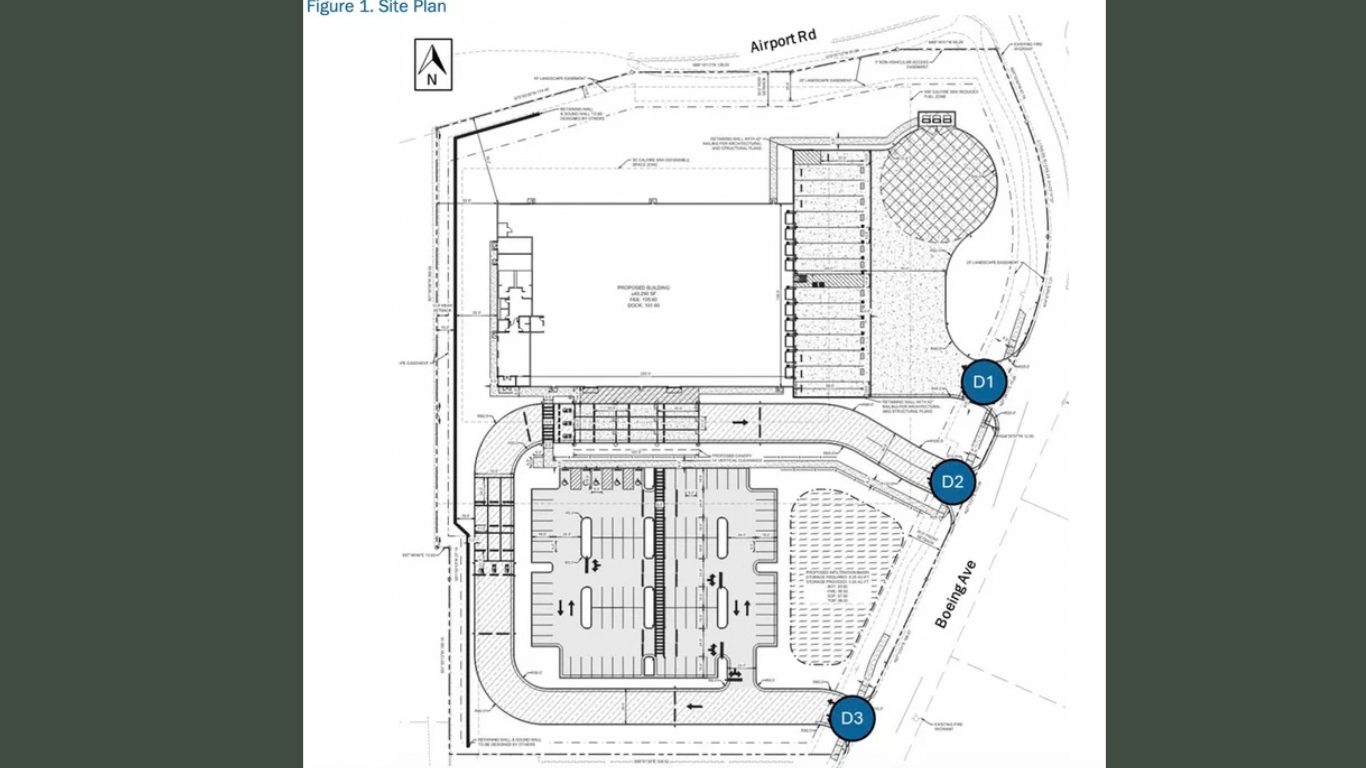
When El Leñador first reported on Project McKinley this May, Humboldt County’s first proposed Amazon facility was still in permitting. The 40,290-square-foot delivery station, nearly the size of a single football field, would be built at 3110 Boeing Avenue in McKinleyville’s Airport Business Park. The project promises faster deliveries and potentially 115 jobs while raising questions about changes to traffic and wildlife.
Now, Humboldt County is overseeing preparation of an Environmental Impact Report (EIR), under the California Environmental Quality Act, commonly known as CEQA.
“An environmental impact report is written to identify what the potential significant environmental effects are from the project,” Humboldt County Planning and Building Director John Ford said.
An EIR does not approve or deny a project. It identifies environmental impacts, alternatives and mitigation measures to inform later county decisions.
The public scoping period ended July 29, asking which environmental issues should be studied.
Jobs, demand and local impact
Cal Poly Humboldt business professor Joshua Zender and students spent the last year studying McKinleyville’s economy. Zender said the community of more than 16,000 has about 1,500 local jobs, about one-third as many jobs per resident as Arcata or Eureka.
“Purely from an economic perspective, I wouldn’t have too many reservations,” Zender said of Amazon. “Why not here?”
Zender cautioned against treating the project like traditional retail. Project McKinley is a last-mile delivery facility, not a storefront, so its economic impact should not be confused with sales-tax revenue from conventional retail development.
The number of jobs does not tell the whole story. Project McKinley could shift some package delivery work from unionized UPS and Postal Service workers to Amazon’s network of contracted delivery service partners.
Amazon’s arrival reflects existing demand. Ford said he has spoken with local businesses that use Amazon, while he and Zender noted the company would be unlikely to invest without a market.
That demand complicates the divide between local business and convenience. Humboldt’s rurality can mean fewer stores, longer drives and slower deliveries, while residents and students shop online and at big-box stores.
Environmental concerns and what’s next
Trinidad resident Debbie Harrison Rumberger participated in the Save Our Coast campaign, which sought a November 2025 ballot measure restricting warehouses larger than 20,000 square feet in Humboldt County’s coastal zone. Organizers gathered more than 4,300 signatures in 10 days but fell short by 500 signatures.
In her written scoping comments submitted to Humboldt County on July 29, Rumberger asked the county to examine lighting, greenhouse-gas emissions, traffic, stormwater runoff, noise and impacts to sensitive coastal species and migratory birds.
Rumberger also questioned the project’s economic benefits in a June 28 Times-Standard opinion piece titled “The Myth of Amazon Jobs.”
“The myth of Amazon jobs is not that jobs don’t exist,” Rumberger wrote. “It’s that we keep counting only the ones Amazon creates and never the ones it destroys.”
The project has also influenced discussion beyond Amazon. On July 14, county supervisors directed staff to draft an ordinance prohibiting detention facilities in unincorporated Humboldt County after concerns that warehouses could someday be converted to immigration detention uses. No prohibition has been adopted, and there is no evidence Project McKinley is intended as a detention center.
Project McKinley raises a broader environmental question about Humboldt’s relationship with convenience. Faster delivery requires trucks, vans, workers, pavement, lighting and a warehouse operating around the clock.
“People will see delivery vehicles in town,” Ford said. “And that’ll be a change.”
The next opportunity for public input will come when Humboldt County releases the Draft EIR. Residents will then have 45 days to review the analysis and submit comments for the public record.
“People will see delivery vehicles in town,” Ford said. “And that’ll be a change.” The next opportunity for public input will come when Humboldt County releases the Draft EIR. Residents will then have 45 days to review the analysis and submit comments for the public record.
Unlike Arcata or Eureka, McKinleyville has no city council or mayor, leaving major land-use decisions to Humboldt County. That makes participation in the public comment process especially important.
The first comment period helped shape the questions; the next gives Humboldt County residents a chance to voice their opinions on the answers before later county decisions are made.


