Protesters rally at Arcata Plaza against sweeps of homeless encampments and citations
About 25 protesters gathered at the Arcata Plaza from April 18-19, for a two-day demonstration against the removal of homeless encampments and increased citations for smoking and loitering in the plaza.
During Saturday’s farmers market, shoppers saw protesters marching with masks and a large paper-mâché figure. The protest was organized by independent activists. It focused on the clearing of encampments, including “The Forty.”
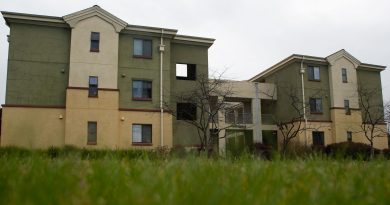
The Forty was a large, long-term homeless encampment located on private property near O Street and Samoa Boulevard in Arcata. Redheaded Blackbelt reported that in October 2025 the camp housed 25-50 people across 20 acres before being cleared out by the Arcata Police Department and property owners due to sanitation, safety and trespassing concerns.
A flyer distributed at the protest said the Arcata Community Outreach Team (ACOT), a unit within the Arcata Police Department focused on working with unhoused people, recently increased citations for smoking cigarettes in public spaces like the plaza, the marsh and bus stops.
“ACOT is a disguise to increase Arcata’s ability to criminalize homelessness,” the flyer stated.
Protesters said unhoused individuals are being fined for smoking, loitering and sleeping in public. Many are unable to pay or appear in court, which can lead to citations and warrants for arrest.
Liberty Weider, a protester who previously lived in The Forty, described her struggles with frequent displacement while trying to secure stable housing.
“I’m from The Forty, and they move me every two hours. It’s very painful,” Weider said. “Now I’m not quite myself. I have epilepsy and serious disabilities. I have to get my SSI together, but how can I function to do that? I came from Oroville, and I’m trying to find a legal place to stay here.”
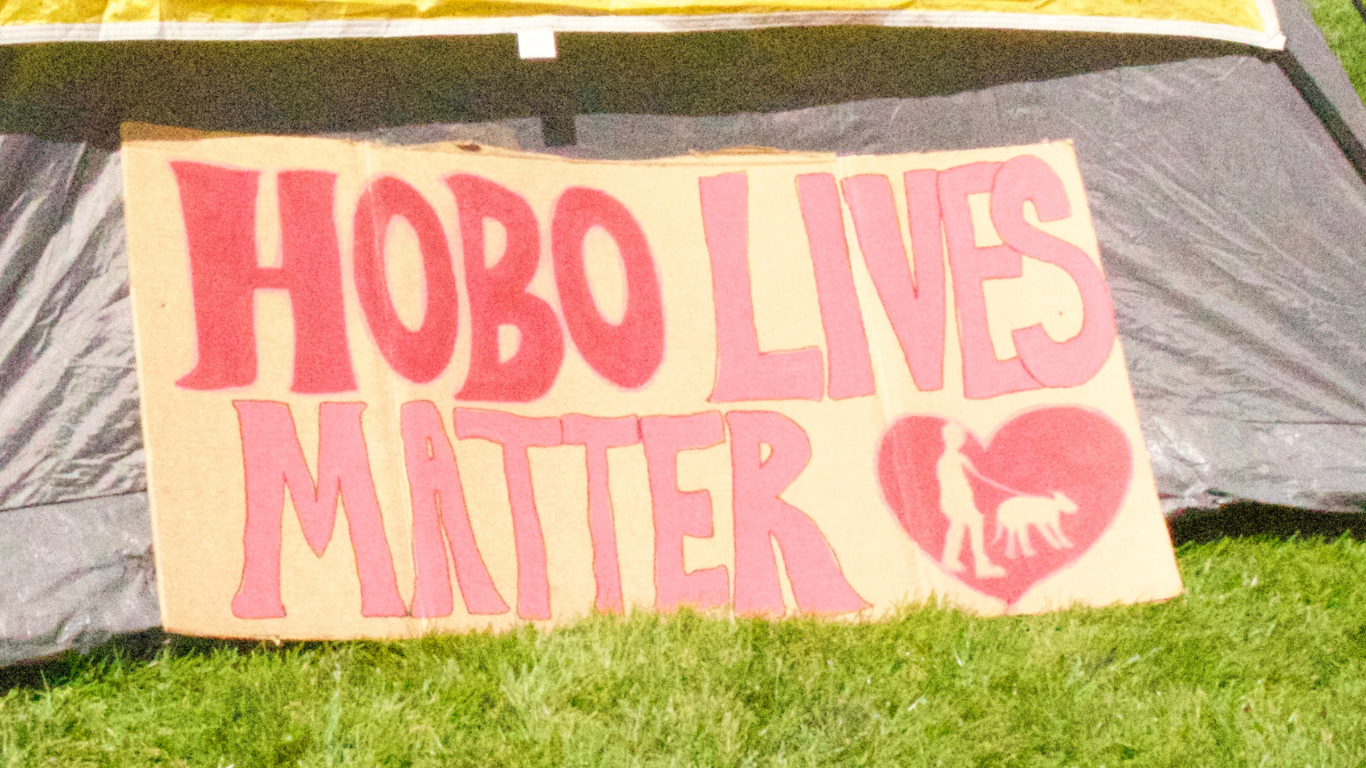
On Sunday, protesters returned to the plaza, setting up tents, playing music, painting signs and continuing their demonstration. Food Not Bombs also distributed food, as they do weekly.
Protester Arturo Flores said the second day aimed to increase visibility and establish a more sustained presence after what he felt was an improvised first day.
“We’re just getting fed up with the way that poor people, who are human beings, are being treated like garbage,” Flores said.
APD Chief Christian Ortega told El Leñador that officers treated the protest like any demonstration, prioritizing free expression while monitoring for public safety. When tents increased and began blocking access, police asked for voluntary compliance.
“We notified them that they were in violation of the municipal code and we asked them to break down their tents and everybody agreed to do that,” Ortega said. “So no arrests, no use of force.”
Ortega added that enforcement of rules like smoking restrictions is citywide and often complaint driven.
“Our gut reaction isn’t to write tickets or make arrests,” Ortega said. “Our goal is to try to connect people with resources and to take enforcement action at the point that we have to do that.”