Trump administration pushes for end to birthright citizenship
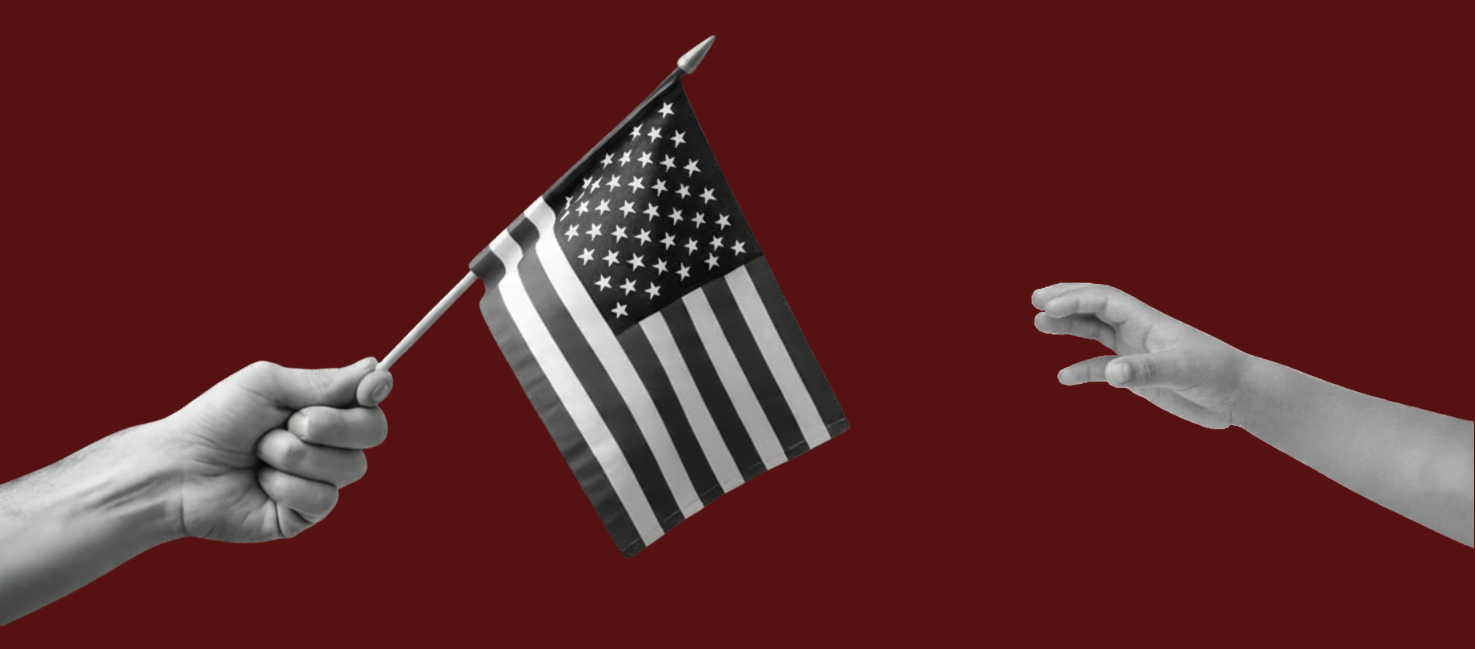
President Trump signed the executive order on Jan. 20, 2025 “Protecting the Meaning and Value of American Citizenship,” aimed at stripping birthright citizenship from those who were born in the U.S. to undocumented parents. On April 1, the Supreme Court heard Trump’s arguments to end birthright citizenship, however they appeared skeptical.
The Constitution’s 14th Amendment states that “All persons born or naturalized in the United States, and subject to the jurisdiction thereof, are citizens of the United States and of the State wherein they reside.”
According to The White House website, with this executive order, the Trump administration is attempting to make the argument that the phrase “subject to the jurisdiction of” excludes undocumented immigrants therefore extends to their children even if they are born on U.S. soil.
UC Davis Legal Fellow Soni Chaturvedi said the executive order is unconstitutional and highly unlikely to pass.
“I think that most Americans and most of our representatives know that this is unconstitutional. This isn’t what our constitution says,” Chaturvedi said. “This just doesn’t abide with the history and precedence of this country.”
The Trump administration argued that if this order were to pass it would only affect children born more than 30 days after it takes effect. Despite this, concerns are still being raised for those who were born to undocumented parents generations ago.
Rosamel S. Benavides-Garb, associate vice president of Diversity, Equity, and Inclusion and the chief diversity officer at Cal Poly Humboldt, said CPH has been having conversations about how to support students during this unprecedented time.
“Cal Poly Humboldt recognizes the uncertainty for our community around the Supreme Court ruling on birthright citizenship,” Benavides-Garb said. “We are closely monitoring the situation, and as we await the ruling, we reiterate our ongoing commitment to providing a safe and welcoming community for students, faculty and staff. We recognize some students may need additional support, and we encourage them to connect with campus programs and services, including the Dean of Students office, Dreamer student resources, and Scholars Without Borders.”
The Supreme Court is expected to make a decision by late June or early July. Justices are likely to rule that the measure is unconstitutional and violates the Immigration and Nationality Act.
Rusty Hicks, chair of the California Democratic Party, explained that the U.S. has a system of checks and balances for instances exactly like this.
“In order to change the law, it would require the amending of the constitutional process by putting in place the 28th Amendment to the constitution, which would require two-thirds of the House and two-thirds of the Senate of the United States, and then require three-fourths support from the states. So three-fourths of the states would have to ratify what the House and Senate had put forward. I find it highly unlikely to near impossible for that to be established.”