Shoshoni Hostler: Beading together identity and hope
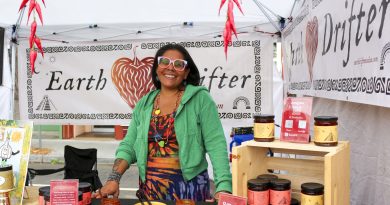
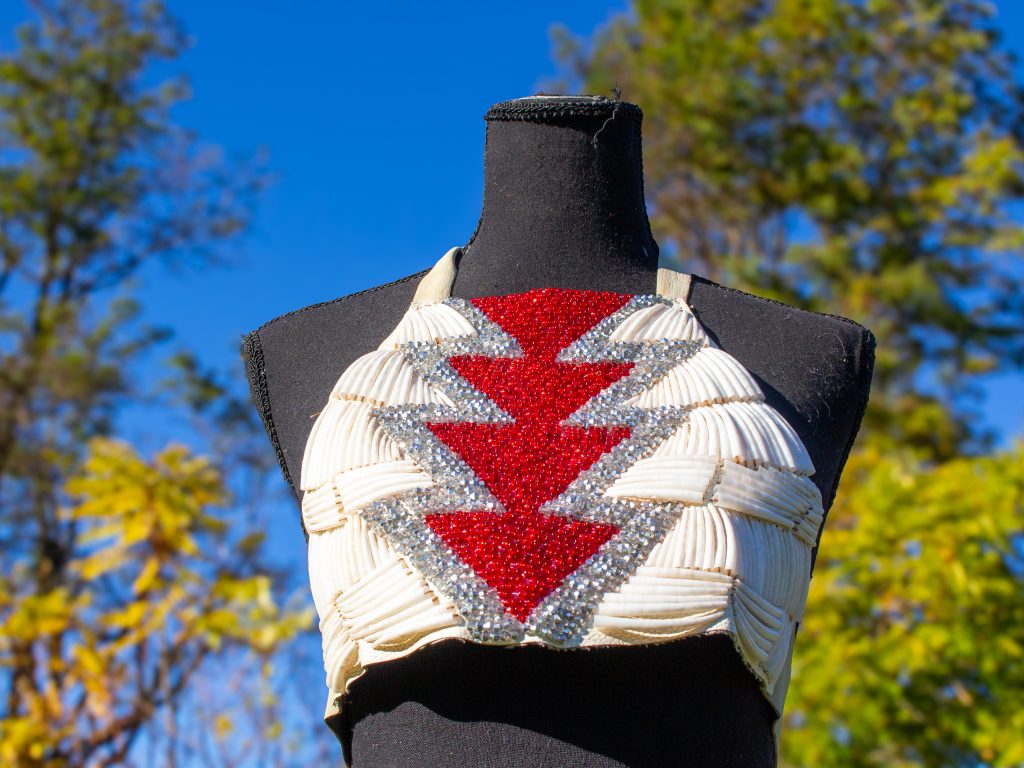
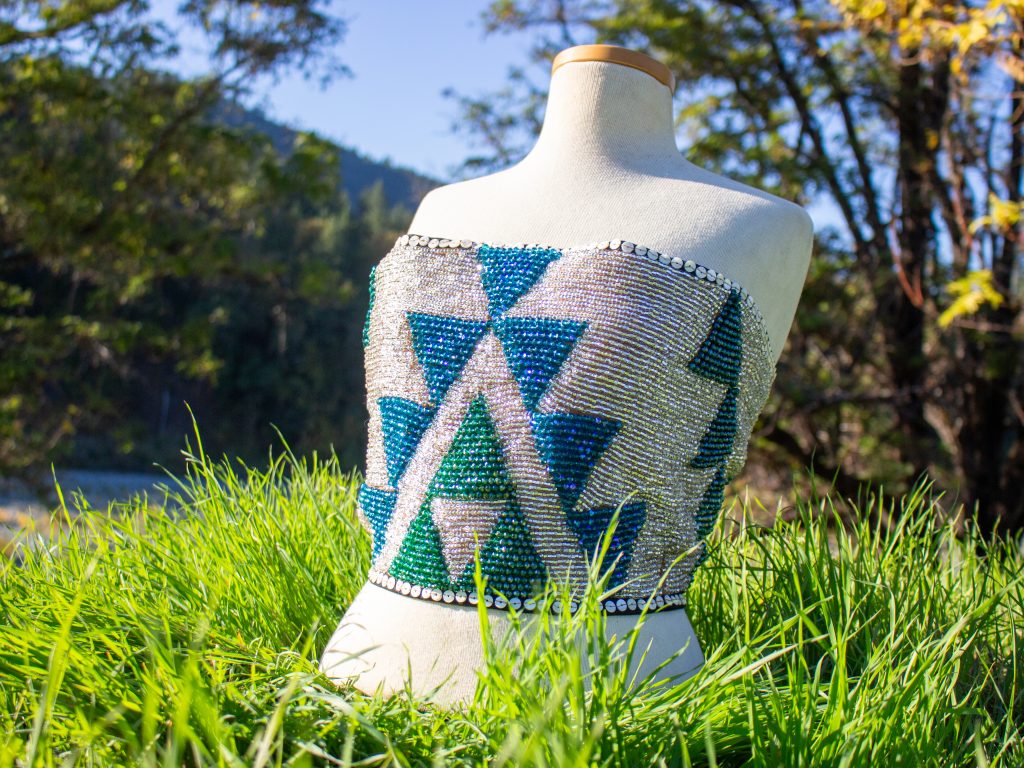
For Shoshoni Hostler, a simple hobby has turned into seeing her handcrafted work graze red carpets and magazine pages. Hostler started with knowledge of Indigenous practices and a few beads. Now she owns her own business, making handcrafted custom jewelry and traditional dress wear. Growing up with her tribal community in Humboldt, her Yurok identity has connected her to a reality and purpose beyond her dreams.
“My work means something bigger than myself,” Hostler said. “It means representation for Indigenous people and showing the variations in our cultures.”
Learning from a Yurok elder fluent in the language, Hostler decided on the name, Nar Rew Ekar, which means “my beautiful beads”, to capture the essence and cultural ties to her brand. As she strung together her first creation, a pair of bear grass earrings she wasn’t expecting to sell, she was overwhelmed with the desire to take up space in the fashion industry as an Indigenous designer.
“I think my first piece is one that has a lot of meaning for me, because it was an example of why I thought Indigenous fashion needs representation, and it’s about a holistic idea of wellness and what you put on your body, and what you put on your body matters,” Hostler said.
A search for solace
Hostler’s mother, an Indigenous jewelry maker, became the stepping stone for her artistic journey. During a difficult period when her mother was undergoing surgeries and health complications, she passed down her love for beadwork to Hostler. Before the series of surgeries, she picked out beads with the intention to give to Hostler, offering an outlet to distract herself while sitting in hospital waiting rooms. This is the moment Hostler found solace in crafting and a connection to her mother during a time when she needed it most.
“It helps to really calm your mind when you have to focus, and even if you’re doing something repetitive, it’s able to really calm your mind,” Hostler said. “And to know that, like my mom had gotten me the beads, and that, this was what she was thinking I was going to be doing while she’s in the hospital, it helped me to kind of dive into it.”
From hobby to Hollywood
Joely Proudfit serves many roles leading Indigenous initiatives. Proudfit is a media consultant and co-owner of The Native Networkers, which provides resources to film and television industries to improve understanding and create authentic representation of Indigenous peoples. As Proudfit walked down red carpets for movie and television premieres in Hollywood, she proudly wore Hostler’s designs.
“Shoshoni Hostler is doing something essential in fashion. She’s centering California Indigenous design in spaces that have historically excluded us,” Proudfit said. “I’ve worn her pieces to major premieres and fashion events because her work is deeply rooted in the land and California Indian materials and traditions. She’s not just making beautiful clothing, she’s creating pieces that speak to thousands of years of knowledge and connection to this place.”

Proudfit has been photographed for Variety Magazine wearing a custom necklace designed by Hostler and has continued to wear her work on the red carpet for years. Breaking barriers in the industry with her craft, is why Proudfit continues to turn to Hostler’s designs.
“Shoshoni isn’t following trends. She’s honoring the land and our traditions while creating something completely original,” Proudfit said. “Indigenous designers, especially those working from specific tribal traditions and materials like she does, deserve to be at the forefront of fashion as innovators, not novelties.”
Being able to proudly create and be a part of the fashion world is an accomplishment not just for herself, but for those she represents.
“A lot of times in larger society, people think that Native Americans don’t exist, that we’re extinct,” Hostler said. “That we are not participating in cultural dialogues and these other spaces, and we actually are. And so it gives voice to that, that we’re not a dead culture, we’re a living culture. We are creative. We are artists.”