Student found guilty of Time, Place, and Manner violations but will face no disciplinary action
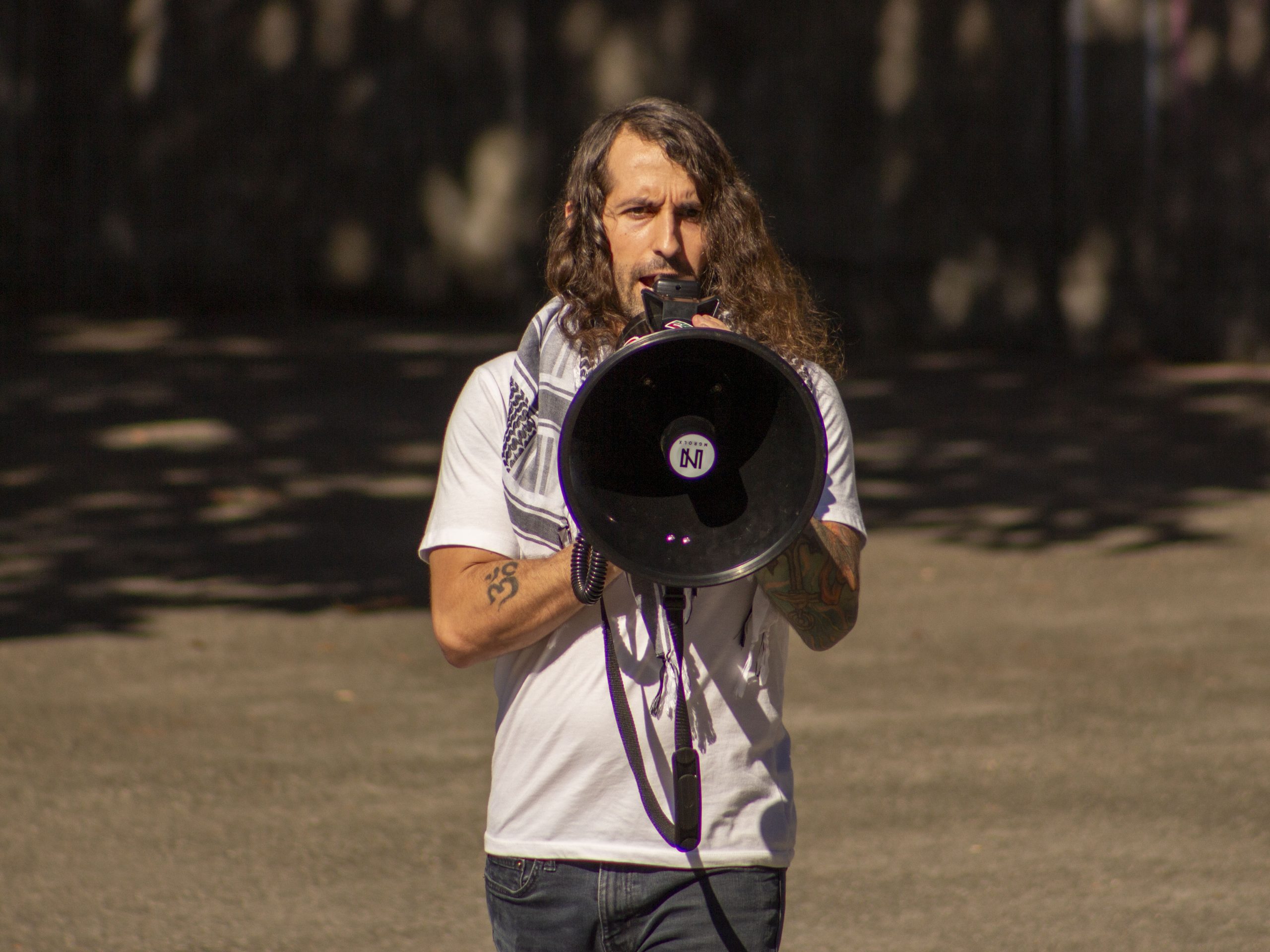
Cal Poly Humboldt student and protest organizer Rick Toledo was charged with Time, Place, and Manner (TPM) violations following the Palestine vigil and march held on Oct. 7, 2025.
Toledo claims that the university charged him with four violations:
“Failure to comply with directions or interference with any university official or any public safety officer while acting in the performance of his or her duties.”
“Violation of any published university policy rule, regulation or presidential order.”
“Willful material and substantial disruption or obstruction of a university related activity or any on campus activity.”
“Participating in an activity that substantially and materially disrupts the normal operations of the university or infringes on the rights of members of the university community.”
Toledo’s hearing was held on Oct. 31, in Siemens Hall. Some time after the hearing, Toledo was found guilty of some charges, but did not receive any disciplinary action.
The hearing
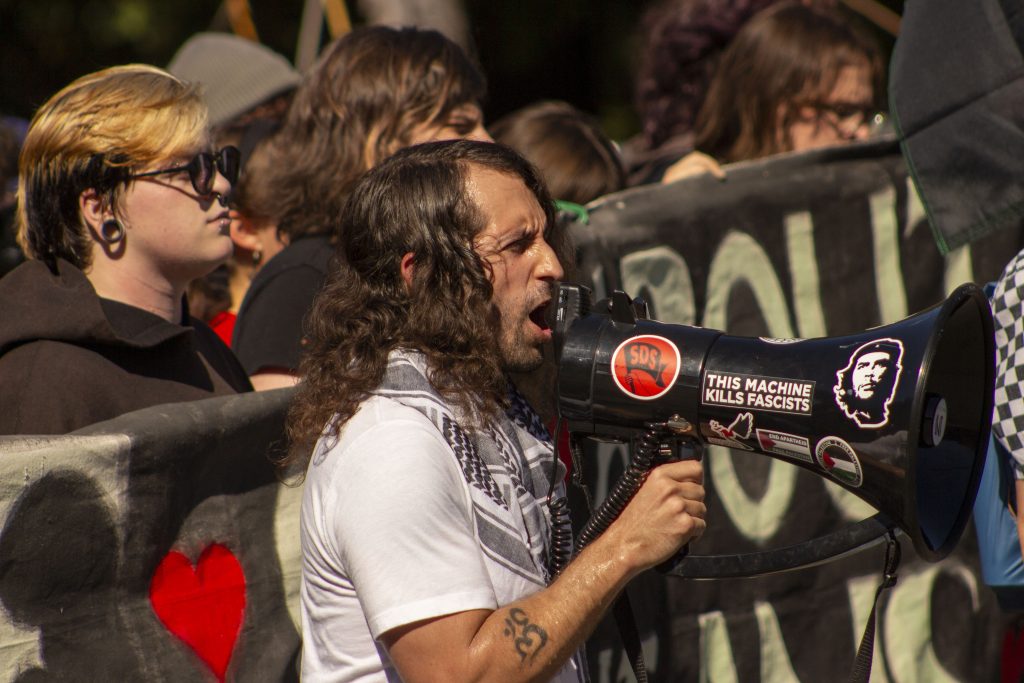
Under the TPM policy, if protesting on campus, a form must be filled to reserve the space. Toledo’s TPM violation case stems from Students for a Democratic Society (SDS), Students for Quality Education (SQE), and Cal Poly Humboldt’s California Faculty Association’s (CFA) initial attempt to reserve the Lower Quad for the Palestine vigil and march.
According to a document provided by Toledo, “Toledo was informed via email that it [the reservation] did not meet the two week advance reservation requirement. In addition, the Lower Quad already had other activities scheduled for that date.”
SDS Officer Neil Brown said the campus reservation system did not show the other reservation in the space.
“For the entire time we planned to hold the vigil, the lower quad was not reserved,” Brown said.
The university offered for the vigil to be held in the Art Quad, organizers ultimately agreed, and a march route was approved.
During the march, demonstrators briefly deviated from the preapproved march route and entered the Lower Quad.
“Nobody was here, if there was a reservation, it sure didn’t look like it. So we came in and made a statement, ‘Look around, is there an event here? They would not let us do this.’ And then we came back,” Toledo said. “ I think that’s where they’re [the administration] saying that the conflict happened.”
The document provided by Toledo states that he led the march and the deviation from the approved path. The document further states, “Once in the Lower Quad, Toledo acknowledged to the group that the area had not been approved for use stating, ‘We have a right to this space, and I say, we go into this space’.”
Toledo claimed that the university construed the detour as a violation of the TPM policy, but he argues that the TPM’s spontaneous event clause, which is an exception to organizing in unreserved spaces, and the Lower Quad’s designation as a free speech zone should have permitted the deviation.
“I would say that spontaneous events are allowed in free speech zones per their own TPM policy. And I would call this spontaneous event,” Toledo said. “We spontaneously decided to enter a free speech zone, and then we left.”
Toledo noted that the hearing was “very informal” overall.
“It seemed like they had already made up their mind on most of what I was guilty of,” Toledo said.
While Toledo was able to successfully challenge some of the charges against him, he was ultimately found guilty but received no disciplinary action.
When asked for comment about Toledo’s TPM hearing, CPH Marketing and Communications stated via email, “Due to policy and protections provided through the Family Education Rights and Privacy Act (FERPA), we cannot comment on specific student conduct cases.”
Reactions to the case
Marketing and Communications stated, via email, “Peaceful expression has long been a part of the University’s culture, reflecting its values of open and respectful dialogue. Cal Poly Humboldt wholeheartedly supports the constitutional rights of free expression and assembly, and encourages open and respectful discussions.”
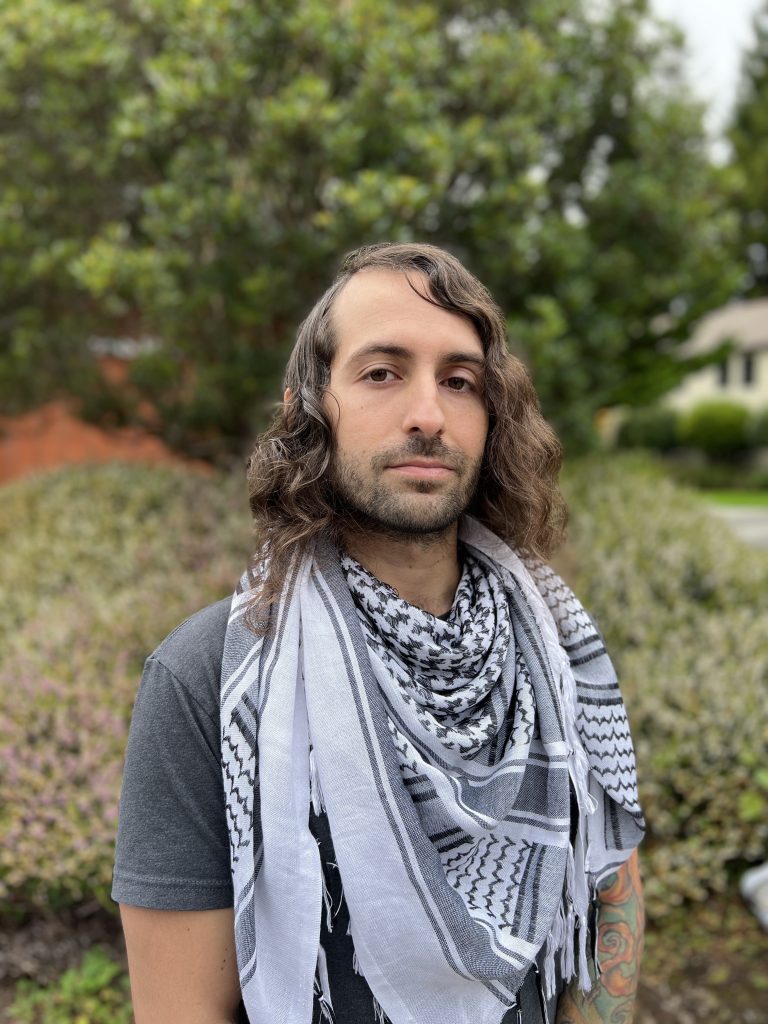
Brown expressed how the TPM functions to limit free speech, and the vague rules allow the administration to selectively apply them.
“In my experience, the application of these TPM rules has not been impartial. It has been very much directed at Palestinian advocacy on campus,” Brown said.
Additionally Brown expressed his fear of the TPM.
“Because if they can interpret what is spontaneous, and students start to gather, and then they have the power to suspend or expel, and that removes housing,” Brown said. “I think that is a very scary thing on campus.”
Toledo expressed that this hearing will not stop his activism and that, given CPH’s history, he wishes to see the administration more supportive of free speech.
“President Siemens, [the namesake of Siemens Hall], stood with Vietnam protesters and said, ‘No, we’re going to stand with them, we’re going to fight with them, not against them’,” said Toledo. “That’s the kind of progressive energy, that’s the kind of progressive history of our campus, and that’s what I want to see from our administrators, not this cautious.”