5 Study Tips: Finals week is not a test of survival
Finals week has a way of turning students into sleep-deprived, caffeine-fueled machines. Late nights, skipped meals and cutting back on water so you don’t lose study time may feel normal, but this survival mode quietly sabotages your memory, focus and exam performance.
By the time exams arrive, our brains are low on fuel, our bodies are dehydrated and our muscles are stiff from sitting too long. We drag ourselves to class wondering why hours of studying didn’t translate into better scores.
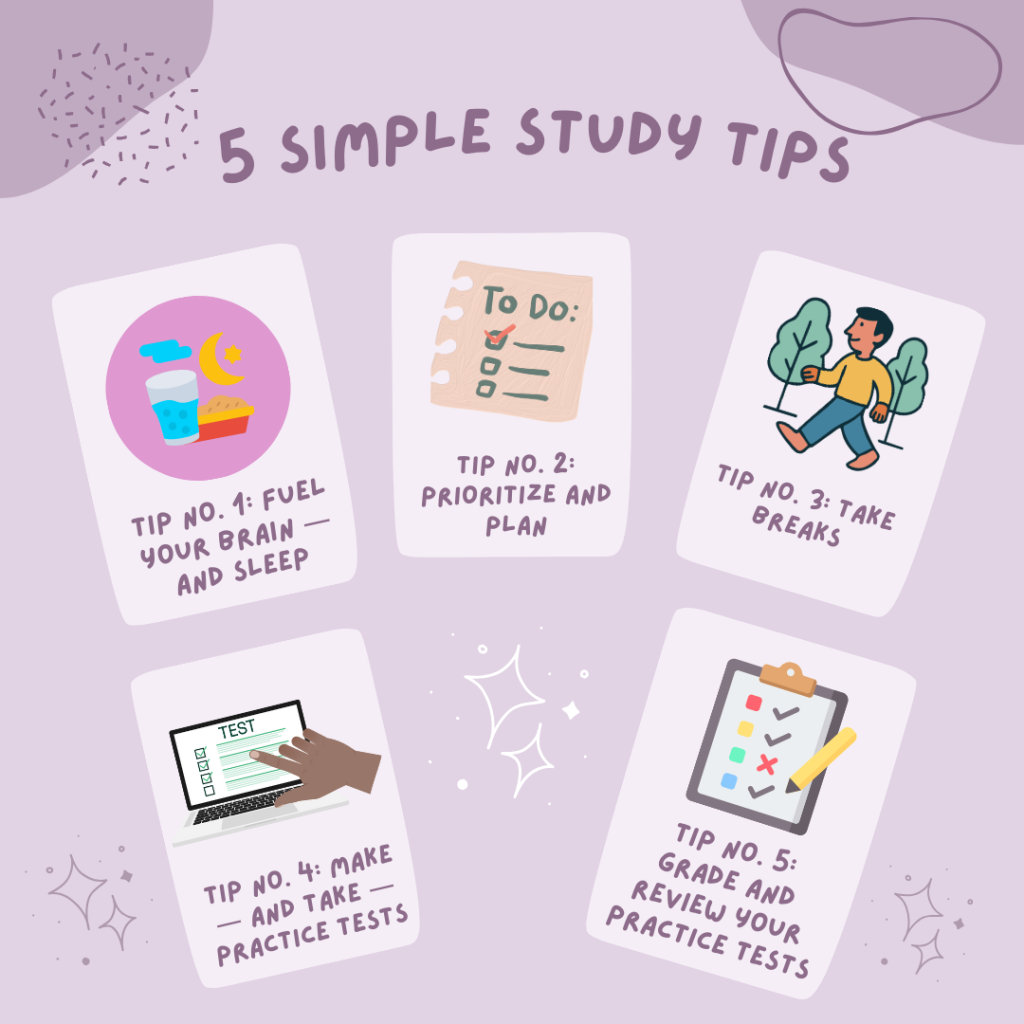
If this sounds familiar, here are five simple study tips you can start this finals season to set yourself up for success.
1. Fuel your brain and sleep
Your brain cannot store energy; it relies on what you eat. That’s why hunger and sugar cravings hit hard during long study sessions. Eat complex carbohydrates and snacks every two to three hours to keep your brain properly fueled.
All-nighters may seem productive, but they work against you. Sleep is when learning is stored in long-term memory. Without at least eight hours of rest, much of what you studied won’t stick and the next day will require even more energy just to function.
2. Prioritize and plan
In his book “How to Get Straight A’s in College”, Cal Newport recommends writing down daily priorities instead of mentally tracking them. This saves mental space, reduces stress and improves focus.
Use a simple 3-by-5 card to list what matters most each day. Check items off as you go, and carry unfinished tasks over to the next day.
3. Take Breaks
Studying non-stop leads to burnout. In his YouTube video Study Less, Study Smart, Pierce College professor Marty Lobdell explains that breaks allow the brain to reset before overload. Studying in 20-minute sessions followed by short breaks allows you to study longer and more effectively without burning out.
4. Make and take practice tests
One of the most effective ways to study isn’t rereading notes, it’s testing yourself. Practice testing is the most effective learning technique when you have limited time to study, according to the article “Improving Students’ Learning With Effective Learning Techniques: Promising Directions From Cognitive and Educational Psychology,” published in Psychological Science and Psychological Science in the Public Interest.
This is also where you can thoughtfully use artificial intelligence. Ask an AI tool to generate a practice test based on your study material, along with an answer key that explains why each answer is correct, and why the incorrect options are wrong. This helps reinforce understanding rather than simple memorization.
5. Grade and review your practice tests
Taking a practice test is only half the work. The real learning happens when you review it. Carefully grade your test and look at the questions you missed. Ask yourself why you got them wrong and what information you needed to know to answer them correctly.
This process quickly exposes gaps in your knowledge and allows you to focus your study time where it matters most. Instead of re-studying material you already understand, you go straight to what needs work — saving time, reducing stress and improving your academic performance exponentially.
I hope these tips help you through finals week and beyond. Small changes now can protect your health, improve performance and carry you through to graduation.
It has been a pleasure writing Health Talk With Jessica over the past year. As this column continues, I would love to hear from you. If you have feedback or health topics you’d like explored, email jd439@humboldt.edu