New coordinator hired for advising free speech demonstrations on campus
Cal Poly Humboldt students looking to table, organize a demonstration, or test the limits of sound amplification now have an advisor to guide them through campus Time Place and Manner (TPM) policy.
Heather Honig, the Interim Constructive Engagement Coordinator, assumed the newly created role this year, serving as the primary point of contact for all free speech activities on campus.
“The broad idea is that we are supporting free speech here on campus,” Honig said. “I work a lot with students. I work a lot with different departments on campus. I do have conversations with faculty, administrators, and it’s the idea that we want a space for free speech, but ensuring that we do it in a safe manner.”
The position was created after the California State University Chancellor’s Office adopted a standard systemwide TPM policy. The TPM was created as a requirement of the California State Budget Act of 2024. Each CSU has its own addendum to the systemwide TPM to address specifics to each campus.
At CPH, the TPM is meant to ensure that all tabling, demonstrations and protests are done safely, not interfering with classes.
El Leñador spoke to a few students regarding their opinions on the CSU’s systemwide TPM policy. Many students were concerned that the policy would stifle their free speech by dictating when and where they were allowed to hold demonstrations.
“If we can’t assemble on campus to respond to things and to cause disruptions when we need to, then that is also an attack on free speech and assembly,” said Rock Toledo of Humboldt Students for a Democratic Society. “Because protest is not supposed to be something that’s approved.”
Chrissy Holliday, the Vice President of Enrollment Management and Student Success, noted that the current TPM is less restrictive than the previous policy.
“It used to be that you could only use amplified sound on the quad between noon and 1 p.m.,” Holliday said. “Now, that time frame isn’t required, but what the measure is, is it disruptive.”

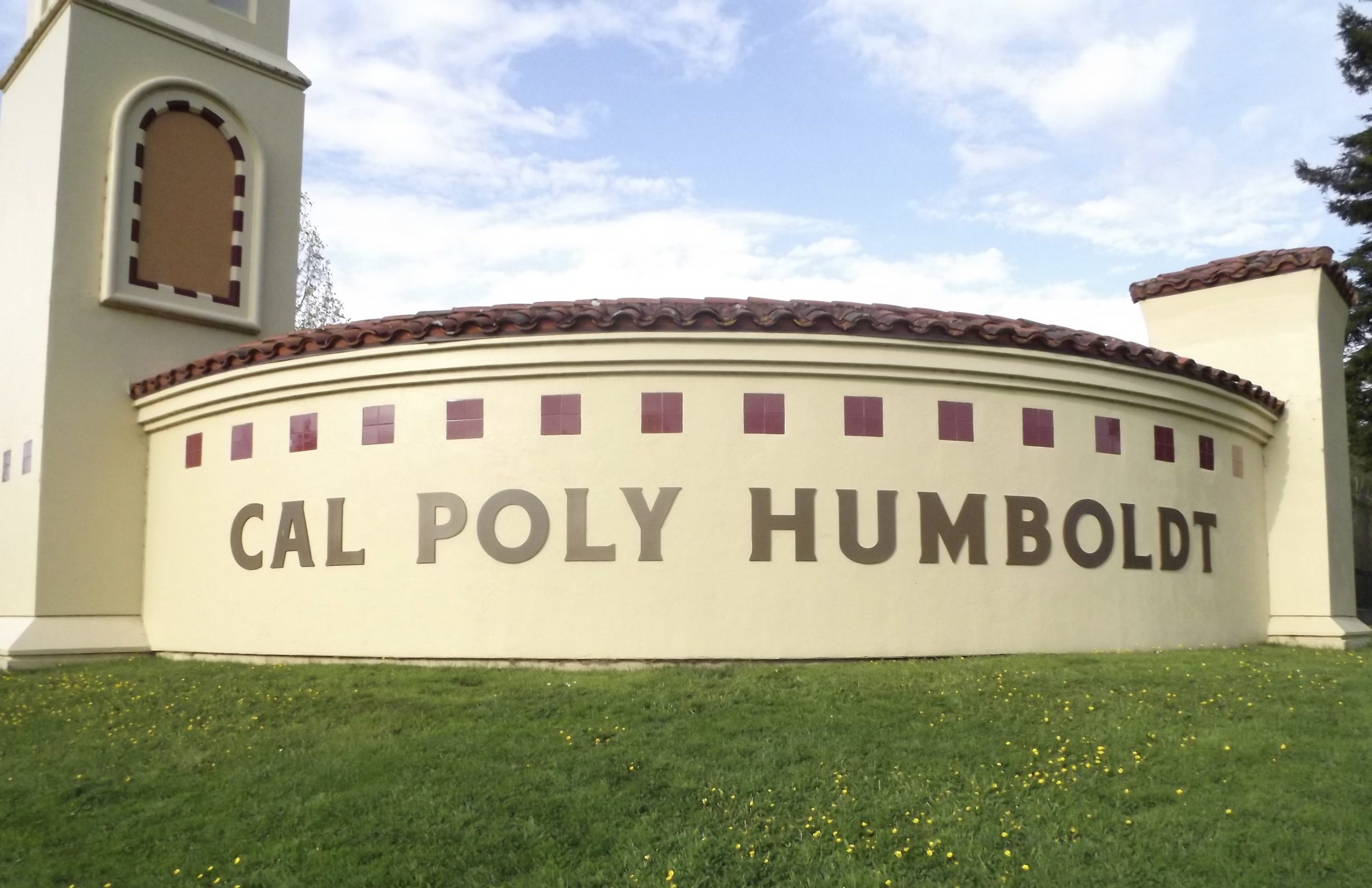
Photo courtesy of Cal Poly
Humboldt Marketing and Communications
Both Honig and Holliday stated that the TPM does not regulate the content of free speech activity.
“It’s less about don’t do this,” Holliday said. “It’s more about, here’s how we need to do it, so we can all continue to live and work together in this space.”
From conduct to support
Before taking on this new role, Honig worked as CPH’s Associate Dean of Students, where she oversaw both advising and discipline. In her new role, Honig no longer deals with discipline, instead she is a source of information for students seeking to express their freedom of speech.
“It didn’t seem very fair if, hey, let me give you support for your event, and by the way, you violated this, and now here’s your sanction,” Honig said.
This separation should assure students that they won’t be punished for seeking advice. Even if a student doesn’t follow the bureaucracy perfectly, they can still turn to Honig for assistance at any step of the process.
“I’d rather people just come to me and talk through what’s going on,” Honig said. “Because if it’s, ‘oops, I didn’t do it,’ it’s okay, let’s see what we can do.”
Scheduled and spontaneous demonstrations
All events are meant to go through the Conference and Event Services (CES) website, where students can find the forms to request the space for their demonstrations. Honig and the CES team help students work out the logistics, ensure that amplified sound is not interfering with classes and that the demonstrations are abiding by fire regulations.
Unscheduled demonstrations, which are done without requesting the space prior, are protected by the TPM policy under certain circumstances.
“There is an allowance for spontaneous protests, which is supposed to arise because of something that has just happened,” Holliday said. “That is allowed under free speech. We have to make space for that.”
In the instance of unscheduled demonstrations, Honig locates organizers and works with them to ensure that they are still able to practice their freedom of speech safely, without disrupting classes.
“I actually get to have these conversations with students and see what’s on their mind, what’s going on with them. And, how can we give you that voice here on campus,” Honig said.
Students interested in demonstrations, tabling or who want to learn more about the TPM can start with the Cal Poly Humboldt Free Speech website or by contacting Honig at hdb2@humboldt.edu.