Breaking down cannabis taboos in the classroom
Cal Poly Humboldt became one of the first universities to offer a bachelor’s degree in cannabis studies, beginning in fall of 2023, with concentrations that include stewardship, equity and social justice.
Unlike some might think, the program does not teach students how to cultivate cannabis, but rather helps foster a space that discusses the importance of cannabis in regards to history, sociology and systematic oppression.
“I think, because we’re under sociology, it’s brought up a lot of those topics of equity and marginalized communities and with cannabis, it’s so specific to those communities, in the way that it was demonized, and in the way that it was prohibited,” said cannabis studies major, Matthias Junker.
Junker feels that the program is strong because of the passion of the professors.
“I feel like in a lot of other majors, there’s like people that are like, ‘I had this one professor that’s super passionate about what they did and that’s why I really resonated with their class’, and it’s like this entire major is built up on that. The only people that we can get are the people that are like that,” Junker said.
Dominic Corva, the director of the Cannabis Studies program on campus and co-director of the Humboldt Institute for Interdisciplinary Marijuana Research, built the program to help train people to be more informed.
“Cal Poly Humboldt’s cannabis major provides an interdisciplinary range of tools for students that they won’t find somewhere else,” Corva said.
Daniel Mar, CPH alum, got started in his cannabis career through networking and nonprofit organizations. Through this Mar met Corva. Corva invited J. Mar to lunch where he discussed the new development of the program and needing someone to do the environmental stewardship.
“The cannabis studies major is so interdisciplinary, and I feel like that is the key to living in this world, you have to take these larger, broader holistic approaches to everything,” Mar said.
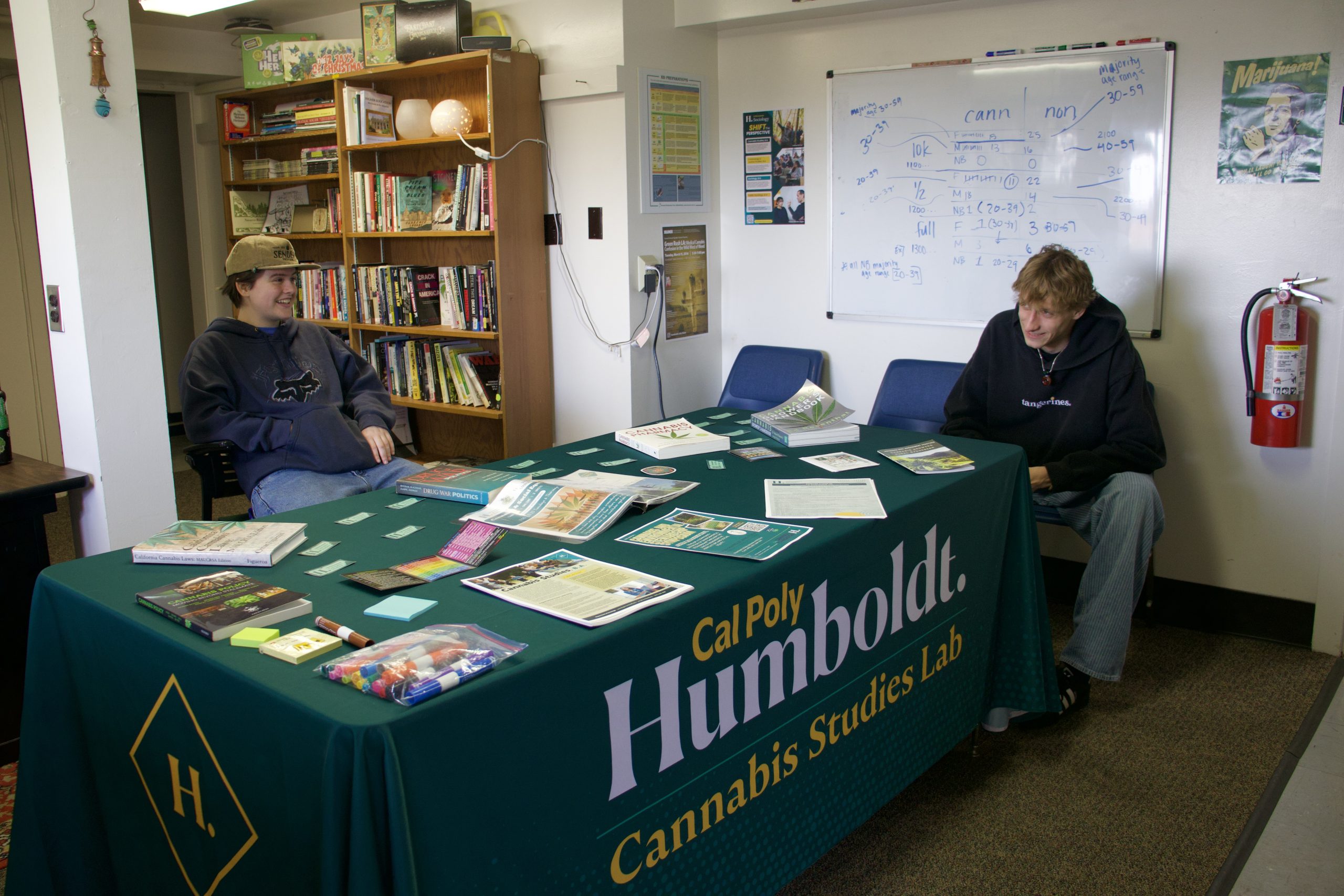
Mar encourages students, cannabis majors or not, to use the resources the Cannabis Studies Lab provides, which is located on the lower floor of the Bret Harte House. From podcast projects, event planning and personal research, the lab was designed to be a community space.
“The takeaway is, like, we’re more than just a major. And the students are building that culture, defining what it is for them here on campus, while we try to, like, change the narrative, break down the stereotypes, and the stigmatization,” Mar said.
The program is currently preparing for their third annual 2026 Cannabis and Environmental Stewardship Symposium. The event is set for April 17 in the Native American Forum (BSS 162), with doors opening at 9 a.m., and events starting from 10 a.m. to 5 p.m. The symposium will bring together people from various backgrounds and create a space to keep the conversation alive.
“There’s always been folks who have been true stewards of the land, stewards to their community,” Mar said. “I think we really need to highlight and elevate those folks, what they’ve been doing, and provide a seat at the table for them, so that we can have industries and communities that are more equitable.”