Indigenous chef Crystal Wahpepah savors culture in new cookbook
When tasting a dish, Crystal Wahpepah closes her eyes, allowing her taste buds to absorb the life of the food while visualizing her ancestors that once shared a similar moment.
As a kid, Wahpepah stood at the feet of her elders pacing around the kitchen, mesmerized by every plate placed before her. Years later, she gets to serve that experience to every person that walks through her restaurant.
“I was taught at a very young age that’s where our ancestors really came through, really into the foods,” Wahpepah said.
Wahpepah opened her restaurant, Wahpepah’s Kitchen, in Oakland in 2021. Specializing in Indigenous cuisine, her restaurant became the first Native woman-owned restaurant in Northern California. The restaurant’s opening day was a defining moment in her career.
“We had lines around the whole block and so that’s when I knew that was the best move I had ever done,” Wahpepah said.
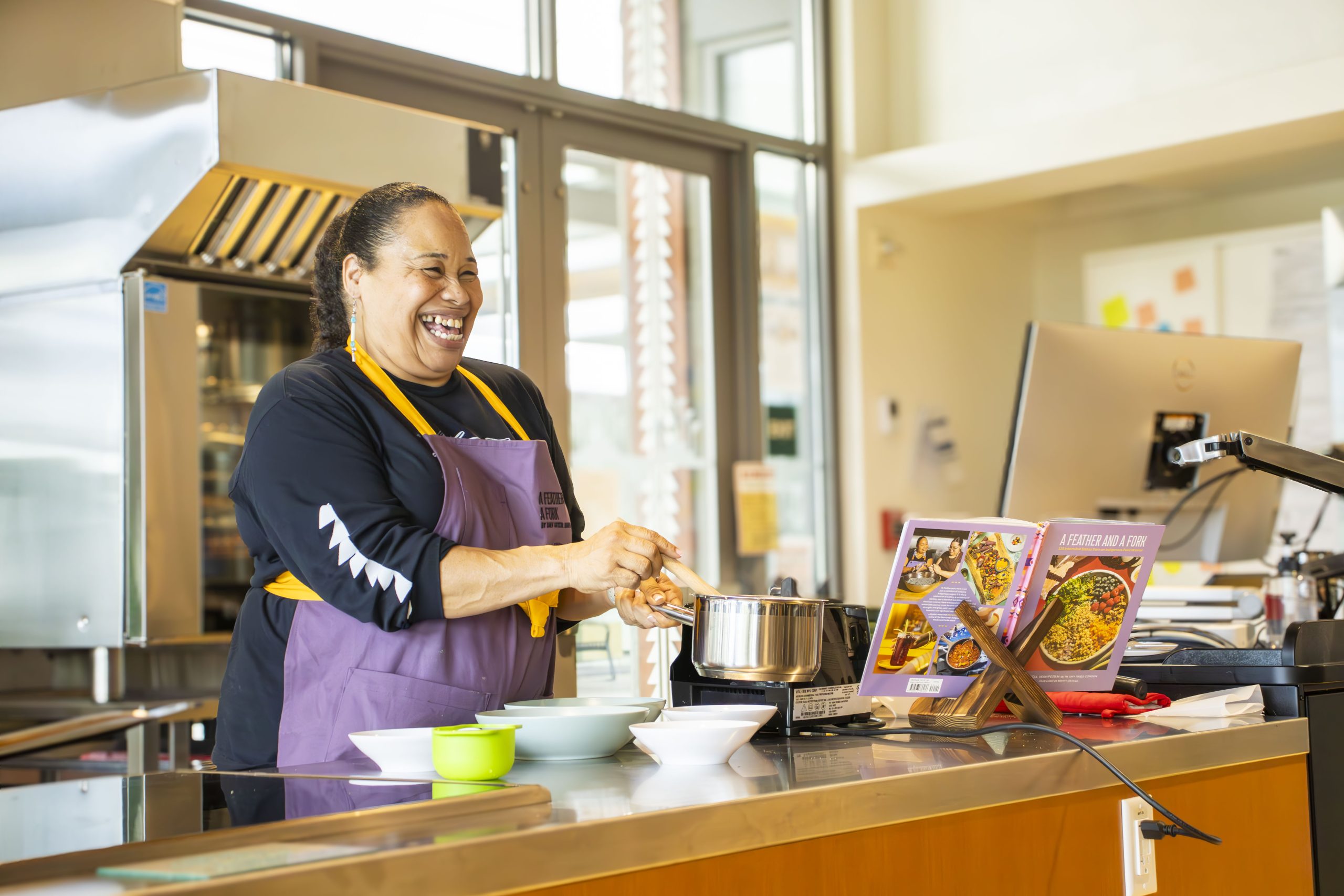
Wahpepah published a cookbook in March called “A Feather and a Fork” which features 125 Indigenous recipes. She spent five years practicing, learning and documenting a variety of flavors inspired by her ancestors and childhood. A central theme in the book centers around reclaiming one’s taste buds and decolonizing our palettes through Indigenous foods.
“I talk a lot about that in the book and how we can really enjoy these flavors that are from the Earth and actually from Indigenous land and how we can really celebrate these dishes but really own our palate,” Wahpepah said.
Wahpepah was inspired to document Indigenous recipes in her book because she felt the power of food as a form of connection and wanted to offer a space for others to find that solace.
“I feel like a lot of Native people don’t have that access when it comes to the native foods, because they’re relocated or either they just don’t have that accessibility to connect with the food,” Wahpepah said. “So, this is one of the reasons why I wanted this book.”
Taffiny Elrod is a chef based in New York and has been following Wahpepah’s work on social media. Elrod believes Wahpepah is breaking barriers in an industry that has historically erased the work of women like her.
“Chef Wahpepah is doing groundbreaking, liberating, hard work,” Elrod said. “She is making new ways, reviving traditional ways, bringing much needed healing and change with strength and purpose in a way that makes me feel proud to be a Black woman chef.”
About 12 years ago Kimberly Tilsen Brave-Heart, an Indigenous chef, connected with Wahpepah after many years of their families being friends. Seeing her grow as a chef and create her book, Tilsen Brave-Heart was drawn to Wahpepah’s infectious energy.
“She really brings a heart to it that is so encouraging and supportive,” Tilsen Brave-Heart said. “Her food is delicious and you can feel that energy and love through her food and through the development of her recipes and the book itself is a labor of love.”
Wahpepah has served as the chef in residence for the past year at Cal Poly Humboldt’s Rou Dalagurr Food Sovereignty Lab (FSL) in the Native American Studies department. The FSL’s Co-Director Cutcha Risling Baldy is grateful for Wahpepah’s impact on the local community.
“I’ve seen a lot of students and staff and community members who feel very inspired by the work that Chef Wahpepah is doing and the visibility of Indigenous foods and Indigenous culture really is important for encouraging people to bring these foods back to the table,” Risling Baldy said.
Risling Baldy feels Wahpepah’s cookbook is a reminder of the important ways food connects us to one another.
“Chef Wahpepah’s cookbook is helping to remind people that these Indigenous foods can be good for everyone, but it also reminds us that we can do more to be really thoughtful about the food that we eat, and that we can create moments of truly understanding our connections to land and the world around us through foods.”
Jaime Lara, the Wiyot Plaza site manager under the FSL, felt Wahpepah’s welcoming presence the second she stepped into the lab, eager to learn all they could from her.
“Through Crystal’s work, from her cookbook, workshops, and Wahpepah’s Kitchen in Oakland, she is actively demonstrating that Indigenous peoples are still here and our cultural foods can still be accessed. I really enjoy that she focuses on intertribal recipes. In contemporary times, it is vital that Indigenous communities work together as we navigate colonialism.”
By documenting Indigenous recipes, Wahpepah’s deepest ambition is to bring forth the culture and identity that has been erased for generations.
“When you think of decolonizing you think that we are removing,” Wahpepah said. “No, you’re not removing, you’re actually putting in something our ancestors did for thousands of years.”